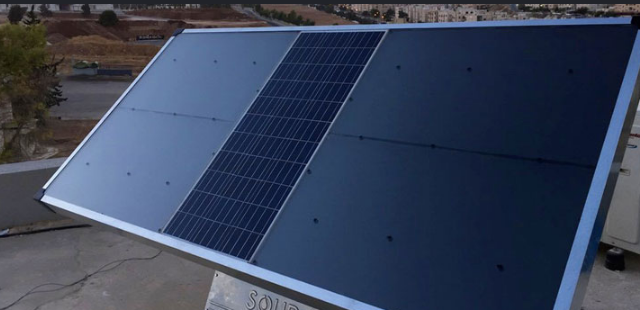

The photovoltaic effect is the basis of the functioning of solar cells and photovoltaic devices. For anyone who shares a passion for solar energy and its potential applications, understanding this concept is essential. In this article we will explore what the photovoltaic effect is, what its characteristics are and how it is produced.
What is the photovoltaic effect?
The photovoltaic effect is a process that has completely changed how we understand energy generation. This method involves changing sunlight into electrical energy through devices called photovoltaic cells, which are made mainly of silicon. These cells are essential parts of solar energy systems.
Photovoltaic cells create electricity from direct current by using sunlight as their energy source. These special devices can keep producing energy, but to use it in your home, it has to be changed into alternating current. This transformation is done with a power inverter.
The main idea of generating electricity through the photovoltaic effect is converting sunlight, which comes as heat, into electrical energy. For this process to happen, photovoltaic cells need to be arranged in series on solar panels. This arrangement provides enough voltage for electricity production.
Not all sunlight from the sky is turned into electrical energy. Some of it is lost when it reflects away, and some escapes through transmission. The amount of sunlight that actually reaches the photovoltaic cells is crucial for them to work properly. This interaction causes electrons to move between layers, resulting in an electric current. [2, 3].
Characteristics of the photovoltaic effect
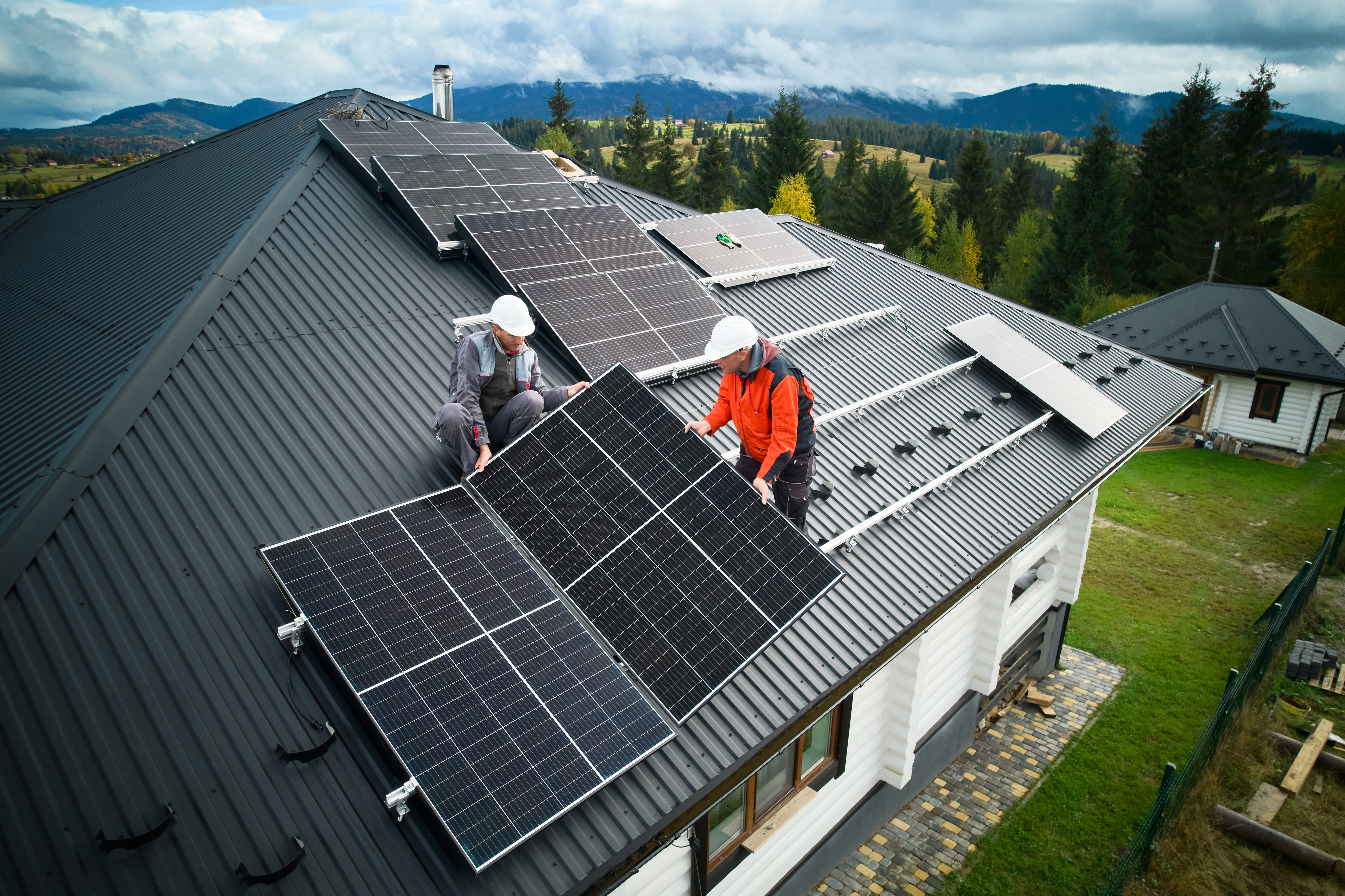
The characteristics of the photovoltaic effect are strongly influenced by the participation of conductive materials. Solar panels, the most common devices that exploit this effect, are composed of many conductive materials, one of the most important is silicon, as I mentioned in the previous lines.
Fish 90% of solar panels are made of silicon, thanks to its unique behavior in reacting to the action of electricity. Silicon plays an important role in the generation of electric current because it has the ability to release electrons under the influence of light. [1]
Solar radiation plays a key role in the release of electrons, a vital process in the photovoltaic effect. In the case of solar panels, solar radiation is the source that frees electrons and shifts them into a more energetic state. In other words, photons from sunlight provide energy for electrons to move and produce electricity.
The production of the photovoltaic effect begins when a photon collides with an electron in the last orbit of a silicon atom. It is a photoelectric reaction in which electrons absorb the energy of photons. If the electron receives enough energy from the photon, it can escape the atom’s orbit. This is the basis of the photovoltaic effect.
The movement of electrons and the generation of charging current are other essential characteristics of the photovoltaic effect. Once the electrons are free, they can travel through the semiconductor material. Silicon directs all the energy where it can be useful. In this process, the electrons that have been released from the atoms move to other atoms where there are vacancies, thus creating a charging current. [2, 3]
The production mechanism of the photovoltaic effect
The mechanism for producing the photovoltaic effect involves several steps, which begin with the generation of a flow of electrons in a semiconductor material, such as silicon, by applying an energy source, in this case solar radiation. This process is based on the use of a constant energy source that produces an electric field with constant polarity. This electric field pushes the electrons in all directions, thus generating an electric current.
Following the collision between a photon and an electron coming from the last orbit of a silicon atom, the photovoltaic effect occurs. If the energy imparted by the photon to the electron is greater than the attractive force of the nucleus of the silicon atom, the electron will be freed. This process requires an impact force of at least 1.2 eV.
Regarding the types of semiconductor materials and the energy required to release electrons, each semiconductor material has a certain minimum energy required to release electrons from its atoms. This can vary depending on the wavelength of the photons hitting the material. Therefore, photons with a shorter wavelength come from ultraviolet radiation and have a large amount of energy, while those with a longer wavelength have less energy and are in the infrared part of the electromagnetic spectrum.
Discover also: green energy: how to produce it and what advantages it brings
The minimum energy required for each semiconductor material to release electrons is determined by the frequency band. This is a range of frequencies in which the material can release electrons upon contact with ultraviolet or visible radiation. If the wavelength of the radiation is shorter than that corresponding to this band, the material will not be able to release electrons, so there will be no electric current.
The mechanism for producing the photovoltaic effect is a complex process that involves a series of steps, from the generation of a flow of electrons in a semiconductor material to their release under the influence of an energy source.
latest posts published

About new generation thermodynamic solar systems

Solar panels and minimalist design: how to integrate them into modern architecture
The impact of solar energy on the energy market landscape

How to choose the right electric scooter for my lifestyle

Innovative solutions to monetize the energy of domestic solar panels

What is the difference between prosumer and producer of electricity

Solar panels for your business, profitable or not?
Solar panels for charging electric vehicles
Renewable solar energy: clean and healthy future