We all know that the Sun rises in the east and sets in the west. Yet, its path during the day is a bit more complicated. Why does this matter? If you plan to set up a solar panel system, you will need to understand the complicated paths of the Sun in the location where you live or have your business, to figure out how to position them and at what angle to set them.
If the solar panels are facing the correct direction and have the right slope, then they will generate the most energy, being exposed to the highest amount of sunlight for the longest time.
In this article you will discover the direction and angle of solar panels and the effect they have on the performance of your solar system.
Orientation of solar panels
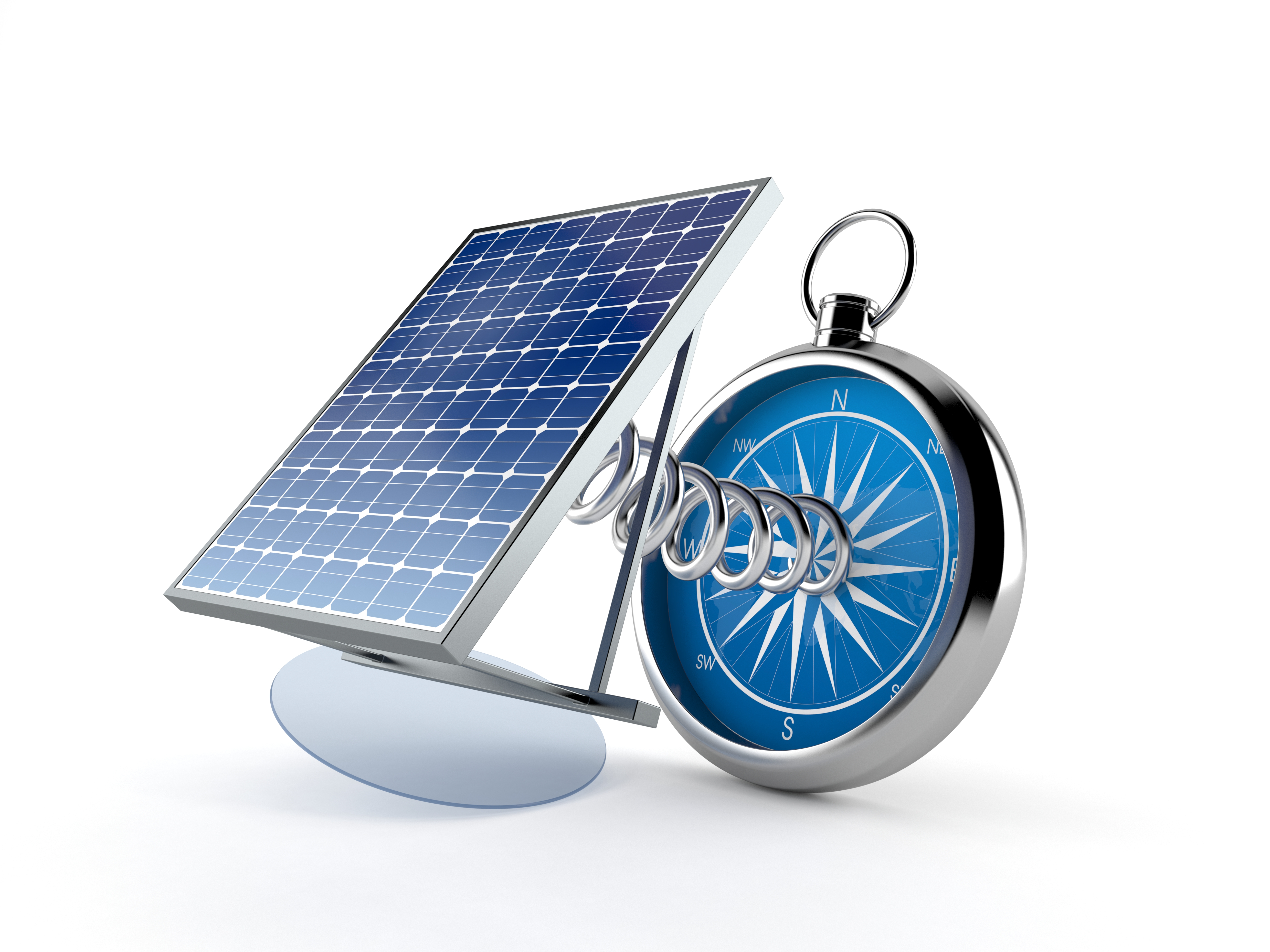
In the Northern Hemisphere, the general rule for placing solar panels is for them to be oriented south (and in the Southern Hemisphere, to the north). This is usually the most suitable direction since the solar panels will receive direct light during the day.
But there is a difference between magnetic south AND geographic south. magnetic south it is the one indicated by a compass, being directed towards the magnetic south pole of the Earth. The photovoltaic panels must be oriented towards geographic southwhich is the direction towards the South Pole, not magnetic south. This is because the panels capture more sun when exposed to direct sunlight. [1]
The geographical distribution of solar energy potential in Romania shows that more than half of the territory benefits from an average annual solar radiation between 1000 and 1500 kWh per m2. On the Black Sea coast and in Dobrogea, as well as in most areas of the south of the country, the annual solar energy flow is between 1450 – 1600 kwh/m2/year, while in the rest of the regions of the country the average solar energy flow exceeds 1250 – 1350 kwh/m2/year. In general, a solar radiation flux of approx 1000 kWh/m2/year is considered a minimum threshold to make installing solar panels a viable option. [2]
See also: How much does a 5 kW photovoltaic system produce?
The degree of inclination of the solar panels
The perfect angle of the solar panels is different depending on the area you are in, being closely related to the latitude of the surface.
The coordinates of Romania are:
- latitude: 45° 56′ 39.43″ North.
- Longitude: 25° 00′ 33.95″ E. [3]
Taking this data into account, there are 2 calculation methods to identify the degree of inclination of the solar panels.
Calculation method 1
Calculate the optimal tilt angle by adding 15 degrees to the latitude in winter and subtracting 15 degrees from the latitude in summer. Therefore, in our country the latitude is 45°, the optimal inclination angle of solar panels over time winter will be 45 + 15 = 60°. On the other hand, the optimal inclination angle during the summer it will be 45 – 15 = 30°.
Calculation method 2
This is an improved method that seems to give better results. In this method, the optimal tilt angle of the solar panels during winter it is calculated by multiplying the latitude by 0.9, then adding 29°.
In the example above, with a latitude of 45°, the tilt angle will be (45 * 0.9) + 29 = 69.5°. This angle is 10° steeper than the previous method, but is very effective at capturing the midday sun, which is more abundant on short winter days.
For summerthe inclination angle is calculated by multiplying the latitude by 0.9 and subtracting 23.5°. In the example above, this angle would be (45 * 0.9) – 23.5 = 17th. For optimal tilt angles during spring and autumn, they are lowered 2.5° from latitude. [4]
Factors that influence the ideal angle of solar panels
Since the angle of the solar panels represents the vertical tilt of the solar system, there are various factors that contribute to choosing the optimal angle of the solar panels:
The slope of the roof
There are different types of roofs such as flat roofs, pitched roofs and curved roofs. Steep roofs may require special consideration when installing solar panels. Due to their high inclination, it may be necessary to use a special mounting system that allows the solar panels to be installed at an optimal angle to maximize sun exposure and, consequently, electricity production. But, depending on the slope of the roof, it is also possible to mount the panels directly on its surface.
In the case of roofs with small angles it is mandatory to choose a fastening system that adjusts the inclination of the panels to the optimal angle.
on
As a general rule, the ideal angle for installing a solar panel is equal to the latitude of the location. However, it is necessary to make separate calculations for each season in order to mount the photovoltaic panels in order to optimize solar exposure for the place where you live.
Time of year/season
The time of year can affect how efficiently your solar panels operate due to the position of the sun. For example, during winter in the Northern Hemisphere, the sun is closer to the horizon. Therefore, it is more difficult for solar panels to capture sunlight to create energy.
What is more important: inclination or orientation of the solar panels?
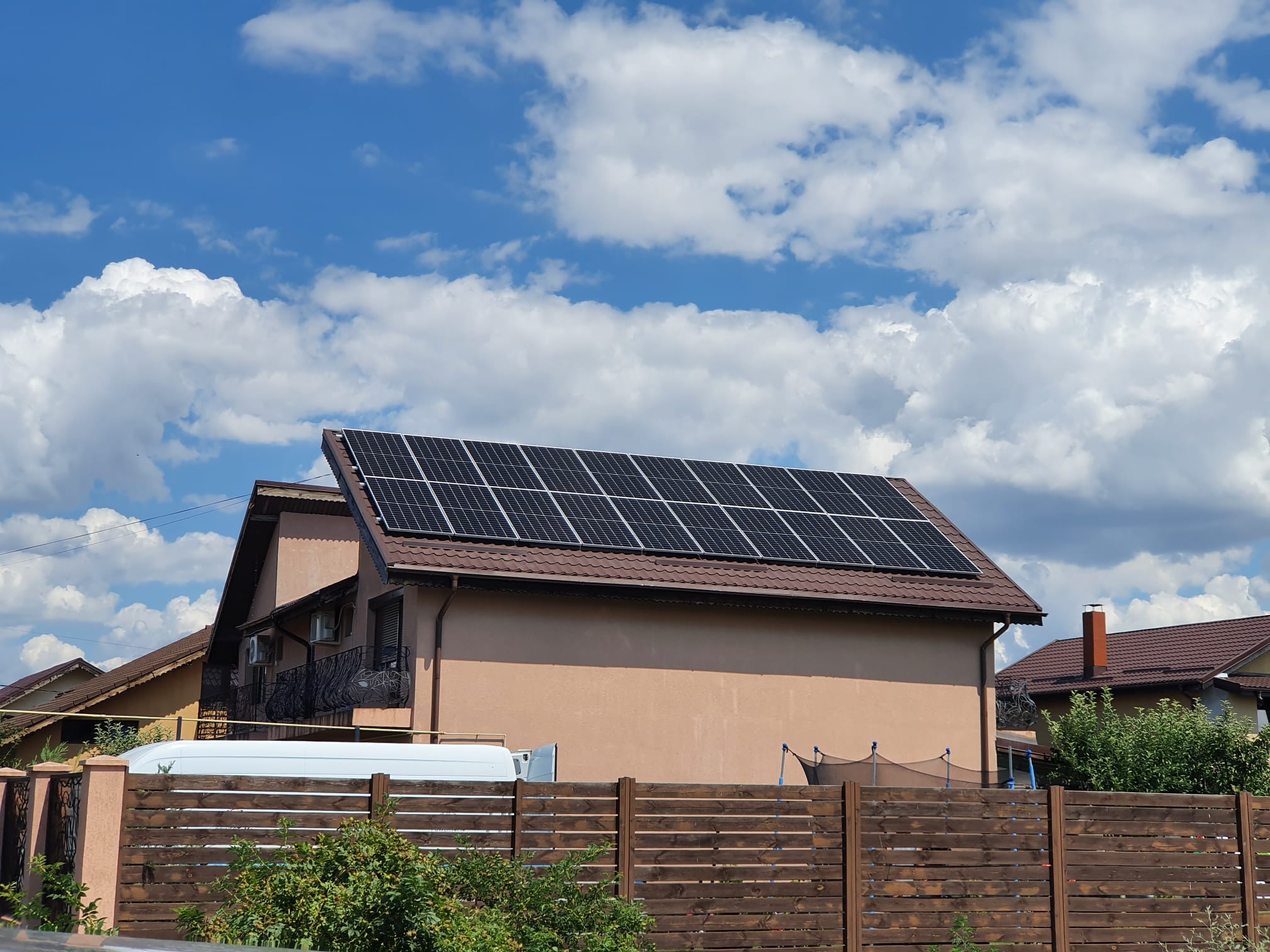
Considering all the details and various factors involved in determining the correct angle for solar panels, you can consider this to be the most important factor in the installation. However, it is exactly the opposite. When it comes to solar panels, orientation is the most relevant variable.
Improper orientation can lead to aa significant reduction in energy productionregardless of the angle of the panels. Setting the wrong angle of your solar panels in the correct orientation will produce more energy than if they were angled correctly but oriented incorrectly.
The correct orientation of photovoltaic panels is essential to maximize energy production. Slope and direction are key factors and can be influenced by latitude, season and roof structure. In conclusion, there is no general “ideal” orientation, but a customized solution based on the specific conditions of each location. Discover a wide range of solar solutions on e-accumulatori.ro and if you need further advice, contact us!
source
[1] Hyder, Zeeshan. “What is the best direction for solar panels to go?” Solar Reviews, Solar Reviews, August 29, 2018, www.solarreviews.com/blog/best-direction-orientation-solar-panels. Accessed October 18, 2023.[2] Solargis. “Global solar atlas”. Globalsolaratlas.info, 2023, globalsolaratlas.info/map?c=45.993145,24.98291,7&r=ROU. Accessed October 18, 2023.
[3] Ana Maria. «What latitude and longitude does Romania have? What are the consequences?» Shtiu.ro, December 30, 2020, www.shtiu.ro/ce-latitudine-si-longitudine-are-romania-care-sunt-consecintele-42888.html. Accessed October 18, 2023.
[4] Dricus De Rooij. «Solar panel angle: how to calculate the solar panel tilt angle?» Sinovoltaics.com, Sinovoltaics (Hong Kong office), 21 July 2015, sinovoltaics.com/learning-center/system-design/solar-panel-angle-tilt-calculation/#:~:text=The%20optimum%20tilt%20angle%20is,34%20%2B%2015%20%3D%2049%C2%B0. Accessed October 18, 2023.
latest posts published
About new generation thermodynamic solar systems
Solar panels and minimalist design: how to integrate them into modern architecture
The impact of solar energy on the energy market landscape

How to choose the right electric scooter for my lifestyle
Innovative solutions to monetize the energy of domestic solar panels
What is the difference between prosumer and producer of electricity
Solar panels for your business, profitable or not?
Solar panels for charging electric vehicles
Renewable solar energy: clean and healthy future