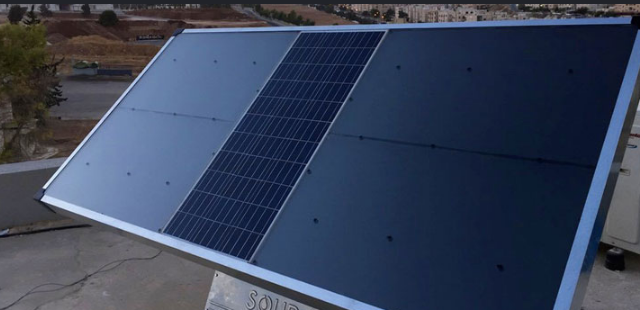
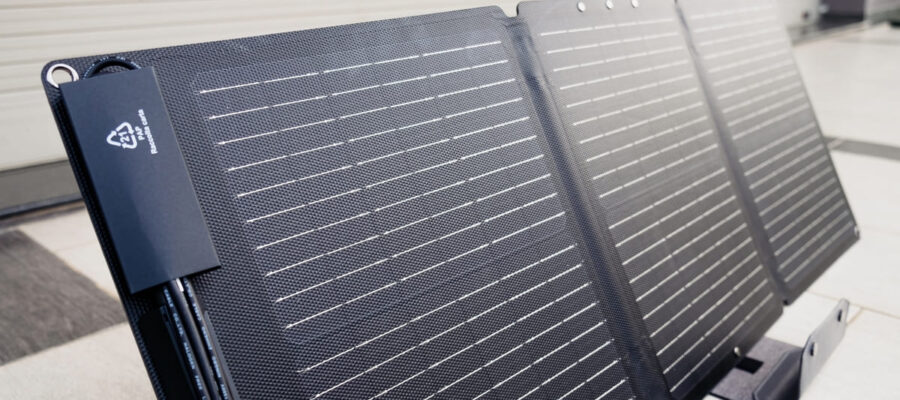
EcoFlow solar panels are the perfect option for anyone seeking energy freedom, whether for hiking, camping, off-grid adventures, or even during emergencies at home. With a high conversion rate (up to 23%) and excellent compatibility with EcoFlow portable stations, these panels offer a reliable and quick source of renewable energy.
Available in various power levels such as 60W, 100W, 160W, or flexible models, EcoFlow panels can be adjusted to meet your energy requirements and space constraints. But how do you pick the one that fits your needs?
Types of EcoFlow solar panels
EcoFlow presents several types of portable or flexible solar panels to the market, each catering to different needs. Let’s go through the available options, with examples for each scenario.
60W EcoFlow solar panel
If portability is your main concern and you only need to charge small devices like phones or portable batteries, the 60W EcoFlow solar panel is the best choice. This model weighs 3.2 kg and has compact dimensions, making it easy to fit into your hiking backpack or car trunk. You can connect it directly via USB-C to receive power quickly, whether you’re in a tent, in the mountains, or at a weekend camp.
100W EcoFlow solar panel
For those needing more power while still valuing mobility, the 100W model is a good option. This solar panel is great for camping or using with a caravan, allowing you to power two or three devices at once – for instance, you can charge your laptop and phone for remote working outdoors.
160W EcoFlow solar panel
If you want to run larger devices or high-capacity portable stations, the 160W EcoFlow solar panel is the right fit. It weighs less than 6 kg, folds easily for transport, and is resistant to water and dirt. Typically, those who select this option want to power a mini-fridge, laptop, and LED lights simultaneously during camping or construction trips.
EcoFlow flexible solar panels
Opt for a flexible panel if you plan to install the generator on curved roofs, boats, or tents. EcoFlow flexible panels, such as the 100W EcoFlow flexible solar panel, provide ease of use and are lightweight, making them ideal for situations where space or weight is a major concern. While performance is generally good, it still relies on sunlight availability and how you set it up.
How to choose the right EcoFlow solar panel for your needs: criteria.
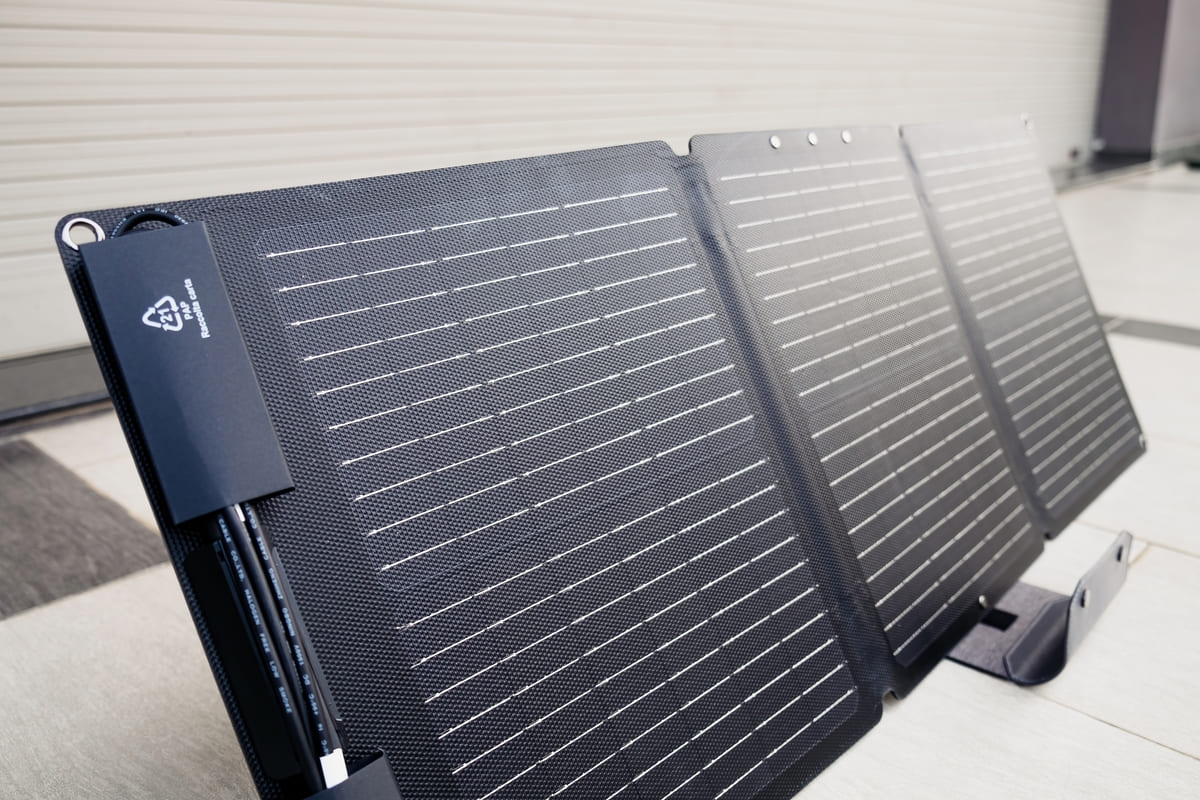
Follow these steps to easily identify the product that meets your needs. Each choice involves a calculation of consumption, conditions of use and verification of compatibility with other devices.
Calculate how much energy you consume per day!
- Start by taking note of each device you want to use with the solar panel (for example: phone, laptop, lamps, portable refrigerator).
- Check the power consumption of each device: a phone needs 10-20 Wh to charge, a laptop 40-70 Wh, and a mini-fridge over 100 Wh in a day.
- Add the total to determine the minimum power needed over the course of a typical day.
Estimate loading time and check efficiency!
- Instead of relying on the maximum wattage indicated on the label, keep in mind that the actual wattage depends on weather conditions. For example, a 60W EcoFlow panel actually produces between 40 and 50W in sunny weather.
- For a 288Wh portable battery, fully charge it in 7–8 hours with the 60W panel or in about 3–4 hours with the 160W if the weather remains nice.
Make sure the panel is compatible with your batteries or power station!
- Each EcoFlow station accepts certain types of inputs. Some have clear limits that are not recommended to be exceeded.
- Check your devices documentation to see if you can connect higher power panels or multiple panels in parallel without charging issues.
Adapt your choice to the usage scenario!
- If you’re traveling for a day or two and only have phones and lamps to charge, the 60W EcoFlow panel is sufficient.
- For longer ranges, remote work, or if you need to power two or three devices at once, opt for the 100W or 160W model.
- If you’re installing the system on a caravan or boat, the flexible options help you make use of curved spaces or have a lightweight system.
Important differences between rigid panels and flexible EcoFlow panels
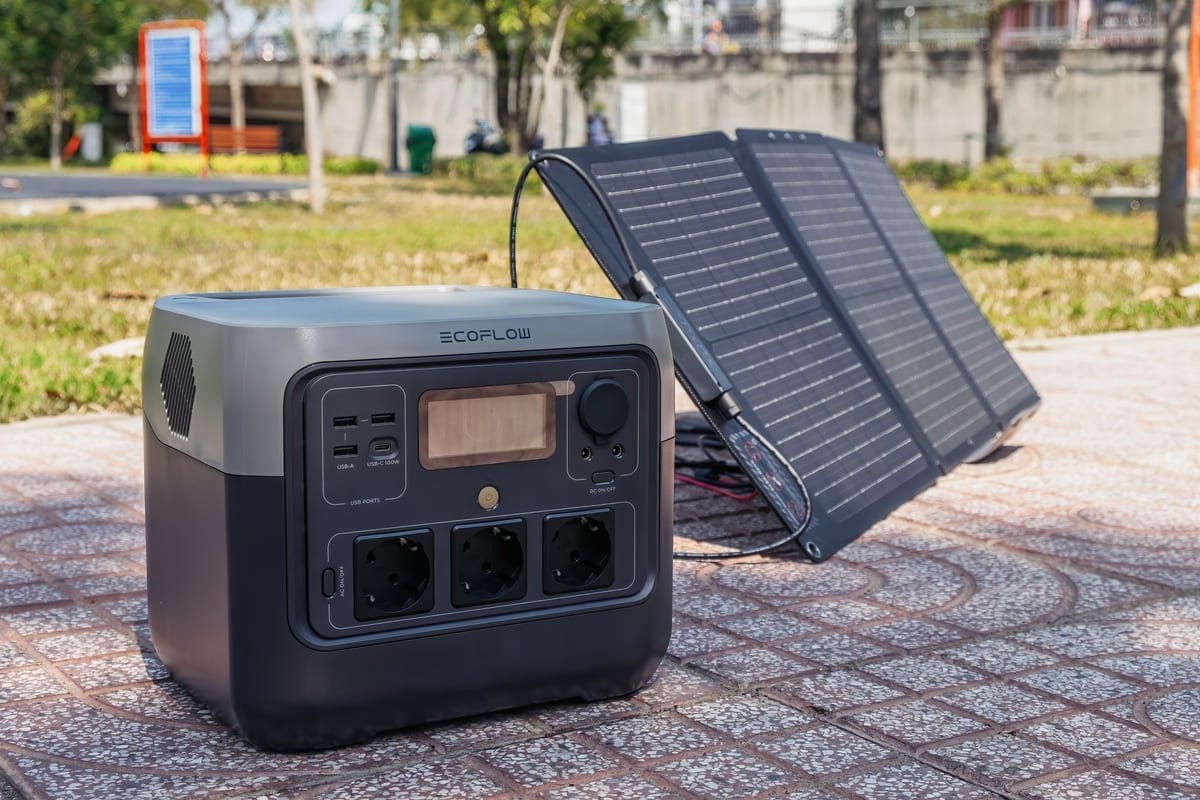
Make an informed choice between stiffness and adaptability, depending on your usage plans.
Rigid panels
They are designed to withstand transportation, impacts and various environmental conditions. These models typically provide consistent performance, making them suitable for temporary home use or for those who want a system that doesn’t move often. Fixing is easily done using special supports, which improve stability in case of wind or weather.
Flexible panels
EcoFlow flexible models respond to the need to adapt to irregular surfaces or where rigidity is not advantageous. You can mount them on the roof of a camper, on a boat or on special tents.
Limits to consider
Flexible panels are less resistant to scratches and require adequate ventilation to avoid losing performance. Mounting too close to the surface causes heating which affects efficiency. If you prioritize long-term stability and efficiency, hardboard remains the practical option.
For more options, you can check out the full list of portable panels.
Additional factors: compatibility, accessories, durability
Carefully analyze the other aspects that influence the choice.
Compatibility and accessories available
Check if the selected panel corresponds to the battery or power station. For greater power, mount two panels in parallel using the appropriate MC4 adapters. Use the best accessories for an efficient system, e.g. Adjustable EcoFlow support adjust orientation during the day.
Place and frequency of use
- If you travel a lot, 60W or 100W panels are the easiest to take with you.
- For fixed installations, mount rigid or flexible versions on the roof, depending on the space chosen.
Additional features
Check the degree of protection from water and dust (see IP certification). If you request the system often, consider the shipping weight and warranty. For example, a panel used occasionally in a tent will hold up differently than one permanently installed on a caravan.
Price and evolution of technology
The investment is justified based on how much you use the equipment and how much power you need. Modern panels easily exceed the 20% conversion rate and become increasingly efficient.
Practical advice for using EcoFlow panels
Apply the following recommendations to benefit from the full performance of EcoFlow solar panels:
- Place the correct panel: orient the panel 30-40 degrees south to capture as much light as possible. For precise adjustment, use an adjustable stand.
- Clean and maintain equipment: remove dust and dirt from the panel surface with a slightly damp cloth. Store it in its case to avoid scratches. Find out some tips on this maintenance of photovoltaic systems!
- Avoid common mistakes: protect the panel from accidental shading and mount it correctly on the battery (respect the polarity). Do not exceed the power specifications indicated by the manufacturer, as this will shorten the life of the equipment.
The 60W EcoFlow panels prove practical for hiking or situations where portability is more important. If you plan to power multiple devices for long periods, the 100W or 160W models support higher consumption and reduce charging time. Flexible solar panels help adapt the system to atypical shapes or vehicles.
Read the specifications of each model carefully, correctly estimate daily consumption and check compatibility with your power plant. If you are unsure, ask a specialist for advice!
latest posts published
About new generation thermodynamic solar systems
Solar panels and minimalist design: how to integrate them into modern architecture
The impact of solar energy on the energy market landscape
How to choose the right electric scooter for my lifestyle
Innovative solutions to monetize the energy of domestic solar panels
What is the difference between prosumer and producer of electricity
Solar panels for your business, profitable or not?
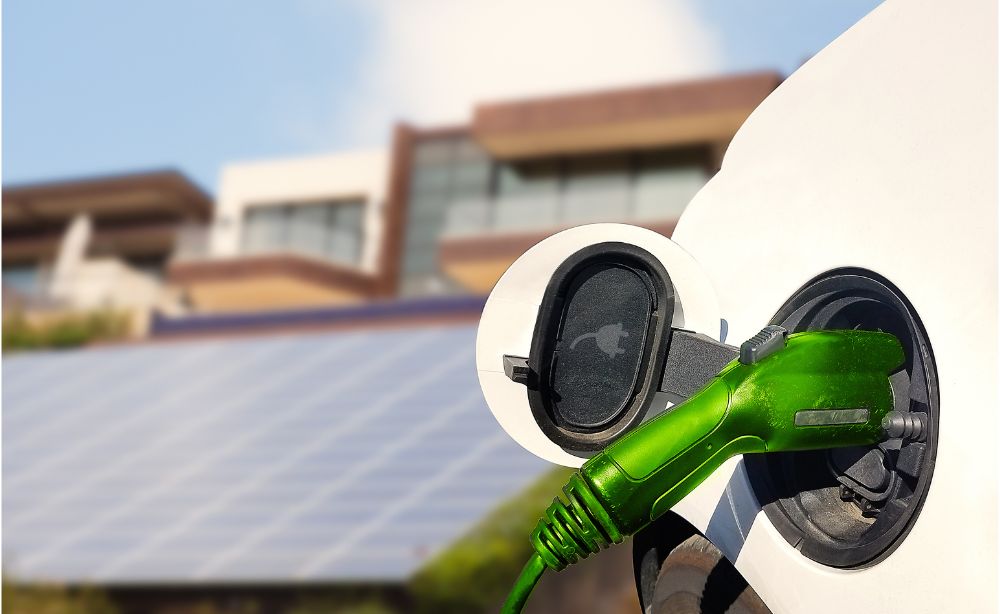
Solar panels for charging electric vehicles
Renewable solar energy: clean and healthy future